How to Respond When People Send Their Baby Picutures
This is the introductory essay in our series on understanding others' feelings. In it we will examine empathy, including what it is, whether our doctors need more of it, and when too much may not exist a adept matter.
Empathy is the ability to share and understand the emotions of others. It is a construct of multiple components, each of which is associated with its own brain network. At that place are three means of looking at empathy.
Offset there is affective empathy. This is the power to share the emotions of others. People who score high on affective empathy are those who, for example, show a strong visceral reaction when watching a scary movie.
They feel scared or experience others' pain strongly within themselves when seeing others scared or in pain.
Cerebral empathy, on the other hand, is the ability to sympathise the emotions of others. A good example is the psychologist who understands the emotions of the client in a rational way, simply does not necessarily share the emotions of the client in a visceral sense.
Finally, there'southward emotional regulation. This refers to the ability to regulate i'south emotions. For example, surgeons need to control their emotions when operating on a patient.

Some other fashion to understand empathy is to distinguish it from other related constructs. For example, empathy involves self-awareness, as well as stardom between the self and the other. In that sense information technology is unlike from mimicry, or simulated.
Many animals might show signs of mimicry or emotional contagion to another animate being in hurting. But without some level of self-sensation, and distinction between the self and the other, it is not empathy in a strict sense. Empathy is also dissimilar from sympathy, which involves feeling business for the suffering of some other person and a desire to help.
That said, empathy is not a unique man feel. Information technology has been observed in many non-human primates and even rats.
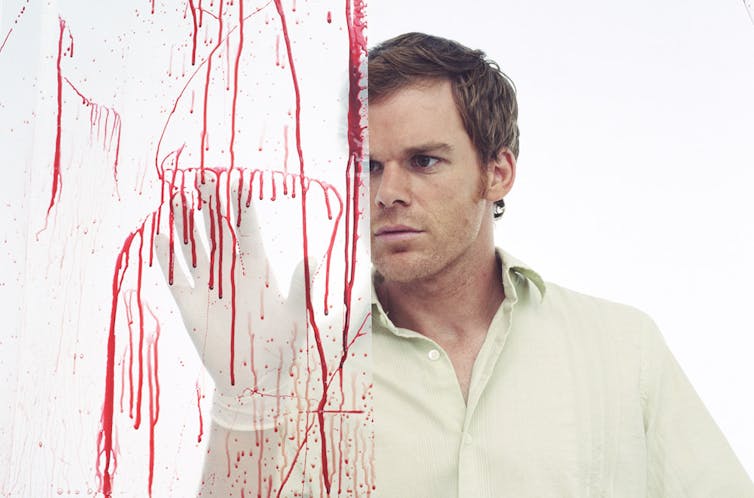
People often say psychopaths lack empathy only this is not ever the case. In fact, psychopathy is enabled by good cognitive empathic abilities - you need to sympathize what your victim is feeling when you are torturing them. What psychopaths typically lack is sympathy. They know the other person is suffering but they just don't care.
Research has likewise shown those with psychopathic traits are oft very skilful at regulating their emotions.
Why do we demand information technology?
Empathy is important because it helps the states understand how others are feeling so we can respond accordingly to the situation. It is typically associated with social behaviour and there is lots of enquiry showing that greater empathy leads to more than helping behaviour.
Yet, this is not always the case. Empathy can likewise inhibit social actions, or even lead to amoral behaviour. For example, someone who sees a auto accident and is overwhelmed past emotions witnessing the victim in severe hurting might be less likely to assistance that person.
Similarly, strong empathetic feelings for members of our own family or our own social or racial group might lead to hate or aggression towards those we perceive as a threat. Think about a mother or father protecting their baby or a nationalist protecting their state.
People who are good at reading others' emotions, such every bit manipulators, fortune-tellers or psychics, might besides use their excellent empathetic skills for their own benefit by deceiving others.

Interestingly, people with college psychopathic traits typically show more utilitarian responses in moral dilemmas such as the footbridge trouble. In this thought experiment, people accept to decide whether to push a person off a bridge to end a railroad train about to kill five others laying on the track.
The psychopath would more oftentimes than non choose to button the person off the bridge. This is following the utilitarian philosophy that holds saving the life of five people by killing ane person is a practiced matter. So 1 could argue those with psychopathic tendencies are more moral than normal people – who probably wouldn't button the person off the bridge – as they are less influenced past emotions when making moral decisions.
How is empathy measured?
Empathy is frequently measured with self-report questionnaires such as the Interpersonal Reactivity Index (IRI) or Questionnaire for Cognitive and Melancholia Empathy (QCAE).
These typically inquire people to indicate how much they concord with statements that measure different types of empathy.
The QCAE, for instance, has statements such as, "It affects me very much when one of my friends is upset", which is a mensurate of affective empathy.

Cerebral empathy is determined by the QCAE by putting value on a statement such as, "I try to look at everybody's side of a disagreement earlier I make a determination."
Using the QCAE, we recently found people who score higher on affective empathy have more than grey thing, which is a collection of unlike types of nerve cells, in an area of the brain called the anterior insula.
This area is often involved in regulating positive and negative emotions by integrating ecology stimulants – such as seeing a machine accident - with visceral and automatic bodily sensations.
We also found people who score college on cognitive empathy had more grey matter in the dorsomedial prefrontal cortex.
This area is typically activated during more cognitive processes, such as Theory of Heed, which is the power to aspect mental beliefs to yourself and another person. It also involves agreement that others have beliefs, desires, intentions, and perspectives different from one's ain.
Can empathy be selective?
Research shows we typically feel more empathy for members of our own grouping, such as those from our ethnic group. For example, i study scanned the brains of Chinese and Caucasian participants while they watched videos of members of their own indigenous group in pain. They also observed people from a dissimilar ethnic group in hurting.
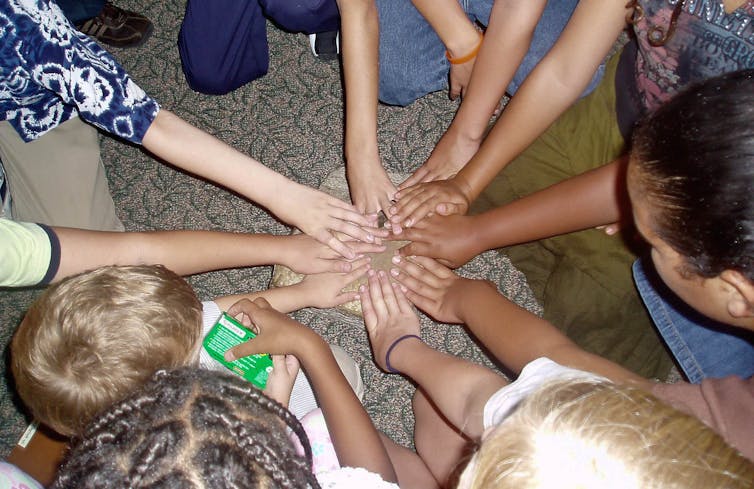
The researchers found that a brain area called the inductive cingulate cortex, which is often active when we see others in pain, was less agile when participants saw members of ethnic groups different from their own in pain.
Other studies have found brain areas involved in empathy are less active when watching people in hurting who act unfairly. Nosotros even see activation in brain areas involved in subjective pleasure, such as the ventral striatum, when watching a rival sport team fail.
Yet, we practise not always feel less empathy for those who aren't members of our ain grouping. In our recent study, students had to give monetary rewards or painful electrical shocks to students from the aforementioned or a unlike academy. Nosotros scanned their encephalon responses when this happened.
Brain areas involved in rewarding others were more active when people rewarded members of their own group, but areas involved in harming others were equally active for both groups.
These results stand for to observations in daily life. We mostly feel happier if our own group members win something, but we're unlikely to damage others simply because they vest to a different grouping, culture or race. In full general, ingroup bias is more about ingroup love rather than outgroup hate.
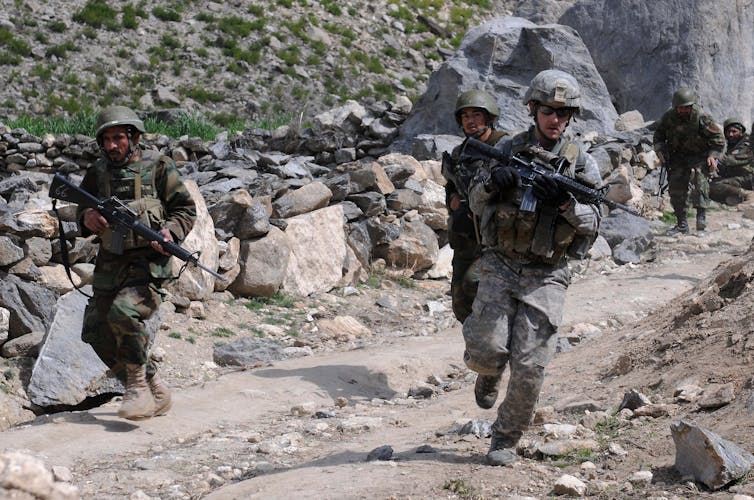
Still in some situations, it could be helpful to feel less empathy for a particular group of people. For case, in war it might be beneficial to feel less empathy for people you lot are trying to kill, particularly if they are also trying to harm y'all.
To investigate, nosotros conducted another brain imaging written report. We asked people to lookout videos from a violent video game in which a person was shooting innocent civilians (unjustified violence) or enemy soldiers (justified violence).
While watching the videos, people had to pretend they were killing real people. Nosotros found the lateral orbitofrontal cortex, typically active when people harm others, was agile when people shot innocent civilians. The more guilt participants felt about shooting civilians, the greater the response in this region.
However, the same area was not activated when people shot the soldier that was trying to kill them.
The results provide insight into how people regulate their emotions. They as well show the encephalon mechanisms typically implicated when harming others go less active when the violence confronting a item group is seen as justified.
This might provide future insights into how people become desensitised to violence or why some people feel more or less guilty about harming others.
Our empathetic encephalon has evolved to be highly adaptive to unlike types of situations. Having empathy is very useful as it frequently helps to understand others so we can help or deceive them, but sometimes nosotros demand to be able to switch off our compassionate feelings to protect our own lives, and those of others.
Tomorrow'south commodity volition expect at whether art can cultivate empathy.
How to Respond When People Send Their Baby Picutures
Source: https://theconversation.com/understanding-others-feelings-what-is-empathy-and-why-do-we-need-it-68494
0 Response to "How to Respond When People Send Their Baby Picutures"
Post a Comment